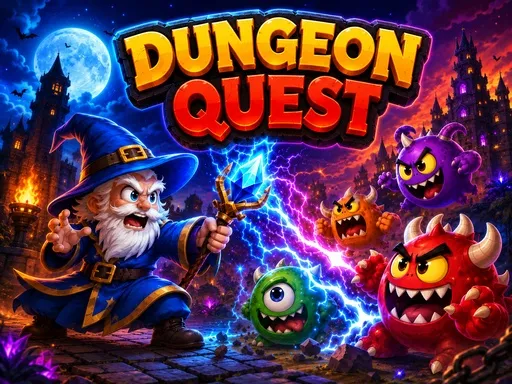
DungeonsQuest is a fast 3D action roguelite you play free in a browser tab. You move a hero through a dungeon while monster waves grow denser, XP gems fill a level bar, and each level offers upgrades that reshape weapons and magical abilities. Elites, mini-bosses and a final boss punctuate the climb. The run ends when your health empties, or when the final fight decides the attempt.
Dungeon waves and the survivors spine
The fantasy is a 3D dungeon rather than an open grassy field, but the spine matches the survivors shelf: keep moving, vacuum XP, pick upgrades, survive a rising curve. The feed instructions list WASD for movement, mouse for menus and upgrade picks, and Esc to pause. There is no separate attack key on that sheet, which is the tell that damage comes from the build you are assembling rather than from a tap-fire rhythm.
Fallen enemies leave XP gems. Walking over them fills the level bar. When the bar completes, the game pauses so you can choose an upgrade. That pause is the whole build system for the attempt. Magical abilities and weapons combine differently each run, which is why two clears can feel like different classes even when the dungeon art stays the same.
Crowding is still the killer. Standing still does not help a survivors-style kit. Circling packs, peeling elites, and leaving a lane behind you keep automatic damage aimed at living targets. Coins appear in the listing’s grow-stronger language; this page will not invent a shop spreadsheet from the feed alone, but it will note that collecting them is part of the same vacuum habit as collecting gems.
Elites, mini-bosses and the final boss
Ordinary waves teach spacing. Elites raise the cost of a bad upgrade line. Mini-bosses are checkpoints that ask whether your coverage can survive a denser silhouette. The final boss is the exam at the end of the density ladder. None of these encounters rewrite the control scheme; they rewrite how punishing a forward-only kit feels.
If your early picks never expanded area or seeking tools, elites that approach from odd angles will shred a hero who only ever upgraded a narrow cone. If you mixed abilities that cover a circle with weapons that spike single targets, the same elite becomes a routing problem. The listing’s language of “combine magical abilities and weapons” is the promise; the practice is reading each offered hand against the dungeon’s current pressure.
Sessions are built for browser tabs. A failed run can end in minutes. A strong upgrade line stretches toward the final boss without asking for an hour-long commitment first. That length suits a break between other tasks and keeps the cost of a dead-end build low.
Upgrade picks that rewrite the kit
Level-ups are where DungeonsQuest separates one attempt from another. The feed does not publish a complete card list with percentages, so this entry will not invent them. What it documents is the decision shape: take the upgrade that covers a blind spot, or take the upgrade that multiplies a weapon you already trust.
A swarm-heavy stretch wants area and multi-hit magic so the automatic layer can clear the ring that forms when you cut too tight a loop. A boss-heavy stretch wants burst and focus so the final fight is not a wall of chip damage. Mobility and defense picks buy the seconds you need to vacuum a gem pile that dropped behind a mini-boss telegraph.
None of these choices ask you to learn a new attack button. WASD stays WASD. Mouse stays the menu tool. What changes is the shape of the damage you carry and how forgiving a mistake feels. That is the survivors promise inside a 3D dungeon wrapper.
Controls and focus
Movement is WASD. Upgrade and menu navigation use the mouse. Esc pauses and resumes. Click the game frame once so the browser passes keys into the embed. If WASD seems dead, focus is usually the cause rather than a broken build. After a level-up choice, movement resumes the moment the pause clears, so be ready to leave the tile where you were standing when the XP bar filled.
A desktop keyboard-and-mouse session matches what the instructions describe. This page does not invent a full touch scheme for a title whose feed sheet leads with WASD and mouse menus.
Where it sits next to other survivors
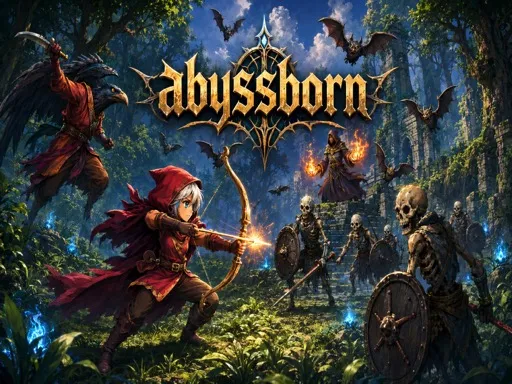
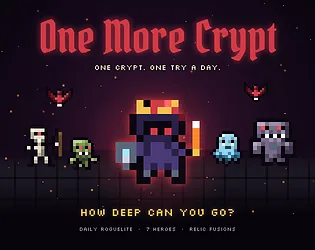
Abyssborn is the compact archery cousin with a single mutating bow. Dreamland Survivors is the pixel-fantasy cousin with reroll, banish and land portals. One More Crypt sits nearby on the dungeon-roguelike shelf for players who want crypt fantasy without insisting on the same auto-attack contract. DungeonsQuest stays on the survivors-like rail: XP gems, upgrade cards, rising waves, bosses.
If you want cute 3D stork stages, open Storky Survivors. If you want a dungeon-flavored auto-build climb with elites and a final boss, stay here. Nebula Marshal swaps the dungeon for planetary WANTED bounties; both still ask you to move while the kit does the damage.
Why another attempt still feels fresh
The draw is how differently the same dungeon hero plays once abilities and weapons stack in a new order. One run clears elites with wide magic and melts the final boss. The next run dies to a mini-boss because the early hand never covered the sides. Both start with the same WASD walk and the same gem vacuum.
Because attempts are short and deaths are cheap in browser time, you learn which early picks cover side spawns, which ones leave you helpless when a mini-boss lands, and which final patterns punish a narrow kit. That learning sits in your hands rather than in absolute play counts this catalog refuses to invent.
Vlad2020 is credited on the GameMonetize catalog page; that host also serves the embed used here. Cover art credit follows the listing. Play in the frame above when you want a 3D dungeon survivors session about movement, XP gems and the next upgrade card.