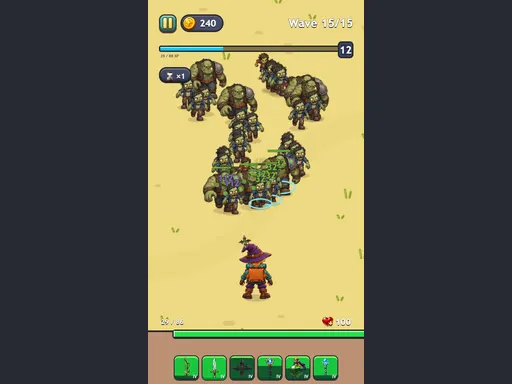
Deadpack is a backpack management auto-battler you play free in a browser tab. You pack weapons into a limited inventory, merge matching gear into stronger ranks, and send a hero into monster waves while attacks fire without a click. Skills appear as you level, gold pays for between-adventure growth, and eight acts of fifteen waves each stretch the ladder past a single warm-up fight. The attempt ends when a wave or boss breaks the loadout you built, or when you push far enough that the next act asks for a different merge line.
Auto-attack with a backpack brain
The survivors near-neighbor hook is simple: the hero attacks automatically once the fight starts. You are not tracing aim circles during the horde. You are deciding what occupies each backpack cell before the wave, and which merges unlock the next power tier. That split—quiet inventory puzzle, loud automatic combat—is why Deadpack sits next to classic survivors even though the prep screen looks like an auto-battler.
Fallen enemies and clear rewards feed the usual growth loop. Level-ups offer skills that change how the automatic kit behaves. Gold and backpack expansion between adventures are the meta layer: more cells mean more merge experiments, and denser packs mean you can carry bows beside swords instead of deleting a line to make room. The limited grid is the difficulty slider. A perfect theoretical loadout that does not fit is not a loadout.
Drag-and-drop is the main verb. Reserve piles, backpack cells, equip actions and arrow-key nudges all exist to solve the same problem: get the right ranks into the right slots before the next wave timer matters. Merging two matching ranks is both an upgrade and a cleanup. Leaving low ranks scattered is how you lose to inventory tax rather than to a boss telegraph.
Merges, skills and the eight-act ladder
Swords, bows, shurikens and magical weapons are the named families on the listing. Early acts teach you that a single high-rank piece often beats a cluttered bag of starters. Mid acts punish greedy merges that empty your coverage: a bag full of one damage type can look strong until a wave wants a different shape of automatic pressure. Late acts and bosses are where the between-adventure upgrades show—if you never bought space or never invested gold, the fifteen-wave blocks start to feel like the same mistake repeated.
Skills on level-up are the survivors card beat inside the auto-battler shell. They do not ask you to learn a new attack button. They ask whether this run wants more clear speed, more boss focus, or more forgiveness when the backpack was a compromise. Because combat is automatic, a bad skill is felt as a longer wave rather than as missed clicks.
Bosses punctuate the act list. Treat them as density checks on the loadout you already committed. If your merges never produced a coherent automatic pattern, the boss will say so without needing a new control scheme. That honesty is why short wave failures are useful: you return to the grid with a clearer idea of which rank ladder you should have protected.
Controls that stay in the inventory
Mouse and touch handle buttons and selection. Drag moves gear between reserve and backpack. Dragging onto a twin merges. Equip pulls a reserve piece into the fighting loadout. Arrow keys nudge a selected item when fine placement matters. None of those verbs are “aim the cursor at the elite.” The fight inherits whatever you packed.
That makes Deadpack friendlier on touch than pure keyboard survivors, and slightly harder to read on a tiny phone when the grid is dense. A tablet or desktop window gives the merges more visual air. Click the game frame once so drags register inside the embed rather than scrolling the page.
Pause and menu habits follow the on-screen UI more than a documented Esc-only scheme. If you need to rethink a merge mid-prep, finish the inventory action before you start the next wave. Mid-fight there is no inventory rewrite—only the automatic hero and the skills you already took.
Where it sits next to other survivors
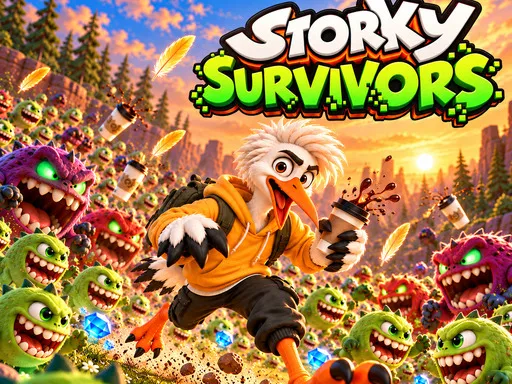
Storky Survivors and Dreamland Survivors keep the classic open-field survivors loop: move the hero, auto weapons, gems, pause-for-upgrade. Deadpack relocates the interesting decisions into the backpack before the wave and keeps auto-attack as the combat contract. If you want continuous WASD routing through a living horde, those titles fit better. If you want loadout Tetris with automatic damage, stay here.
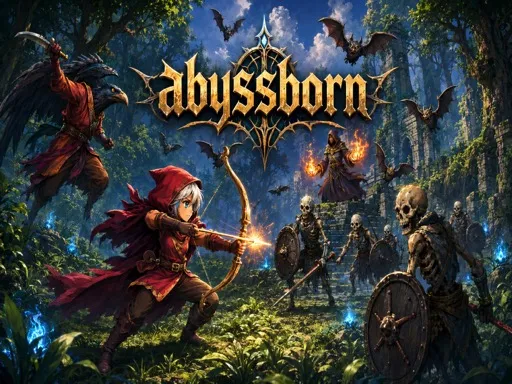
Abyssborn is the lighter archery cousin: still auto-fire, still short attempts, but the build is almost entirely the in-run skill hand. Deadpack spreads the build across merges, equip slots and between-act gold. Both reward planning more than twitch aiming; they just place the planning on different screens.
SCRAP ARMS NEO sits on the weapon-stack side of the family. Deadpack is the inventory-merge side. Players who like Brotato-style packing puzzles will feel at home even if they have never opened a Vampire Survivors clone before.
Why another act still feels fresh
The draw is not a new attack button. The draw is how differently the same hero plays once a merge line, a skill order and a slightly wider backpack stack into a new automatic pattern. One act clears with shuriken ranks and a greedy damage skill. The next act lives on mixed coverage and a defensive pick that makes boss waves boring in a good way.
Because waves are short and acts are many, the cost of a dead-end merge ladder is a few minutes rather than an evening. You learn which early ranks to protect, which bosses punish mono-bags, and when backpack expansion is worth more than a shiny weapon. hvadym1 is credited on the GameMonetize catalog page; that host also serves the embed used here. Cover art credit follows the listing. Play in the frame above when you want a survivors-adjacent session that is mostly about packing the bag and then trusting the auto-attack.