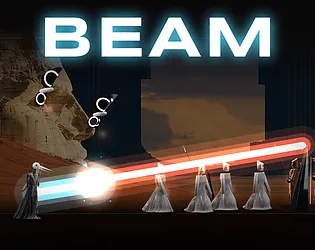
BEAM gives one button a lot of work. You hold to charge, aim while the shot builds, and let go to fire. Release at the right instant and the beam hits harder and goes through shields. Hold too long and you burn. Everything else in the game is built around that timing decision.
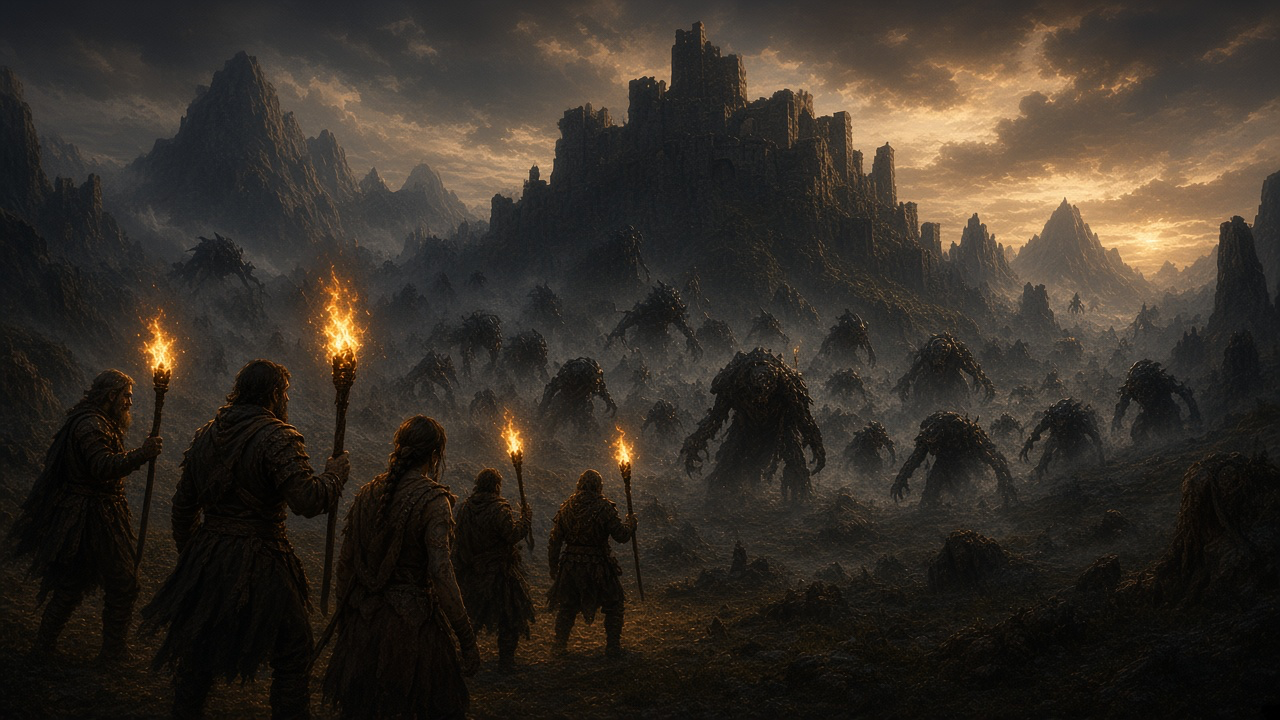
The premise is spare. You are in a dark fantasy world, Heralds stand between you and the end of the run, and your only tool is the beam. No classes or second weapons are described, so the beam has to carry every fight on its own.
The shot
A quick tap fires a small shot, which is the option when you cannot afford to wait. A full charge takes more time, but the payoff is a heavier hit. The flash is the cue: fire on it and the beam pierces shields, which changes the shape of a Herald fight. Overcharging is the punishment, and it is a real one.
When a Herald fires, the game asks for a different response. You hold the beam and hammer the input through the clash instead of timing a release. That clash is the one place where the input changes from holding and aiming to repeated tapping. Mashing is the whole input during those moments, so there is no aim to manage while the clash runs.
The whole game is a timing test with a build layer attached. You are always choosing between a fast shot that is safe and a charged shot that is worth more if it lands on the flash. Overcharging adds a second way to fail on top of simply missing. The same decision repeats under different cards, so there is something to practise.
Cards and roads
Between fights you pick up cards, and each one changes how you handle the next encounter. The game describes four builds, and two of them are named: rapid shots and a beam that splits through a prism. Baiting Heralds is mentioned as another approach, so the card pool rewards more than raw damage.
The road you take is its own choice. Fights, elites, shrines and bounties are the node types the listing lists, and you decide which of them to walk into. The map is not large, but it still asks you to weigh risk against whatever a shrine or a bounty returns.
Twelve cards are in the pool, and each is described as changing the next fight. That keeps a run legible: you can see what the last pick did and judge whether the road you took to reach it paid off.
Three regions, five minutes
The setting is dark fantasy, and three regions are named: the Ochre Waste, Under the Ring and the Lit Wall. Runs are short. Five minutes is the stated length, which fits a design where a bad release costs you a fight rather than a long investment.
The structure is three acts with twelve fights and two bosses. That is a complete run in a small package, and it is why the game can be learned in a sitting. No character or class selection is described. One weapon carries the whole thing, which puts the variety in the cards and the roads instead.
Phone play and short runs
BEAM runs in a browser, and the creator says it works on a phone held sideways. The inputs translate: hold a finger to charge and aim, lift it to fire, tap for a quick shot. Touch is a supported way to play, not a desktop-only control scheme.
In practice that means a short game you can finish in one sitting and replay straight away. The cards give each attempt a different problem, and the beam gives every attempt the same core test. It is not a long campaign, and it does not offer character choices. What it offers is one weapon, a timing window and a set of routes that ask you to commit.