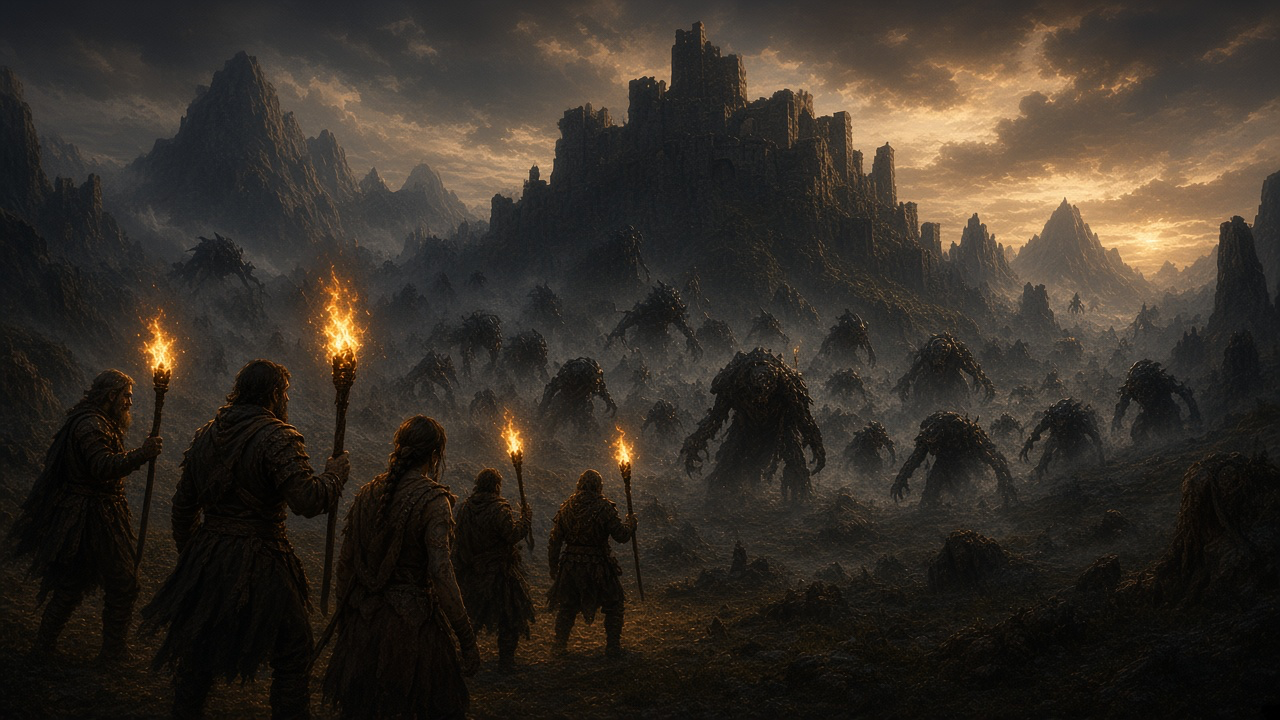
Rite of Blades is a 3D top-down boss rush built on duels. Fallen warriors are bound to a ritual, and every win makes the next fight harder. Norn Shadow Games is a solo developer, and the current build is a prototype with one boss.
One boss, many attempts
The structure is a duel, then a harder version of the same duel. Winning makes the boss quicker and adds new attack combinations to its set. The third Ascension goes further and gives the fight a second phase.
Ascensions are the ladder the game uses for difficulty. The listing names Ascension 3 as the point where the second phase arrives, and it says upgrades can unlock after wins at higher Ascensions. There is one boss in the build, so the escalation comes from the same opponent rather than a new one. The premise hints that the last Ascension grants the fallen warriors another chance, but the build does not show what happens.
That single opponent is the whole design. Learning its cues is the progression, and a run you lose still teaches you something about the next attempt.
Ritual and twelve upgrades
Fights pay Ritual, whether you win or only land damage. The payout is based on the victory or on the damage dealt, so a loss is not empty. Ritual buys permanent upgrades from a pool of twelve options that cover attributes and new techniques. Ritual is paid out per fight, so the gap between a wipe and the next attempt is short.
Twelve is a small enough pool to know by name, and the split between raw attributes and new moves means a build can lean either way. Some of those options stay locked until you win at a higher Ascension. Upgrades can also be sold back, which gives a bad early pick a way out. The upgrades are permanent, which is what keeps the pool from resetting between attempts.
Reading the fight
Combat is about the boss’s tells. You watch for an attack cue and pick a moment to strike, dash in or dodge out. A three-hit combo is the main damage tool, and the timing of it is up to you. Every hit in the fight comes from your input.
The inputs are conventional for the genre. WASD or the arrow keys move, the left mouse button or J attacks, the right mouse button or K fires a dash attack, and Space or L dodges. Esc pauses, and menus take the mouse, the arrow keys or an analog stick.
Positioning does as much work as the attack button. Each win adds combinations to the boss’s repertoire, so the cues you learned in one attempt arrive in a new order later. That is the reason a cautious attempt tends to last longer.
What is here so far
The build is a prototype with one boss, and the developer is working toward a demo. The demo’s content and release timing are not defined, so there is no date to plan around. What exists now is the duel loop and the upgrade pool around it. Every victory raises the bar rather than ending the game.
It is free on itch.io. The game opens there in a new tab rather than in a frame here, and the itch.io listing carries the current build. The listing is the place to check before you plan a session.
The narrow scope is worth knowing before you start. One boss and a prototype build means a short stay, not a campaign, and the appeal is repetition with a sharper opponent each time.
What the listing does describe is a focused fight with clear rules and a reason to try again. That is a fair trade for a free prototype on itch.io, and the Ascension ladder gives the single duel more than one shape.